Another main element is mixed-age groups. Most Montessori classrooms are composed of a three-year age span. This encourages peer learning and mentorship. The younger ones will learn from the older ones. Older children cement their knowledge by teaching concepts they have mastered.
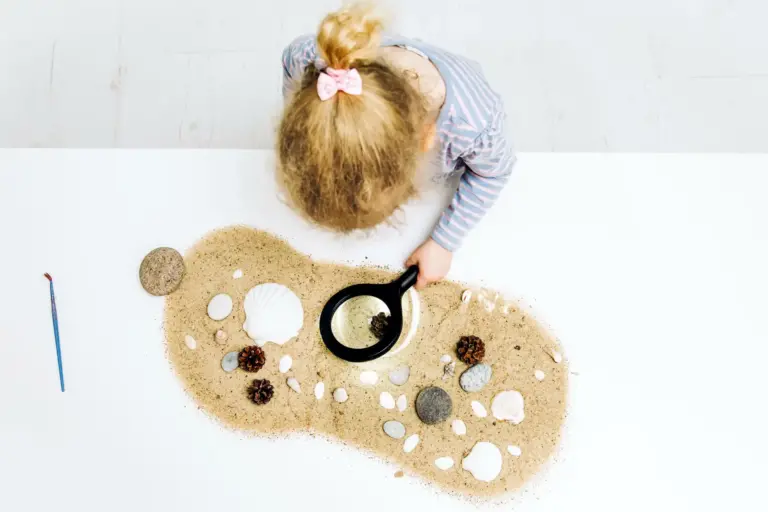
For example hands-on learning forms the core of the Montessori learning method. Children work with hands-on material that engages their senses to materialize ideas. For example, children may use beads in learning about mathematics. This method aids their memory and intellectual understanding through touching.
This approach also considers practical life skills. Children practice pouring, buttoning, and sweeping activities. Fine motor movements are derived from these activities. These tasks also develop responsibility and independence in children. They learn to look after themselves and their environment.
Furthermore, Montessori education is focused on the whole child: emotional, social, and physical development. Children learn to handle their feelings. They work cooperatively and respect others.
The role of a teacher in the Montessori education is important. But they are more like guides than the traditional teachers we find in most other schools. They observe each child and prepare materials and activities appropriate for the stage of the child’s preparedness. This personal approach helps in having each child progress at an individual pace.
Assessment differs from traditional means. Grades or standardized tests are not applied. However, teachers examine and document results based on each child’s progress. They tailor the learning experience to each child’s needs based on such observations.
Also independence is a major focus. Children can work on self-chosen activities. According to their pace of interest in the activity, they put in work so that they can complete it. This autonomy brings intrinsic motivation and love of learning.
Respect for the Child – this is more of a principle. Because Montessori education treats children as capable people. It provides an environment that allows them to nurture their potential. Children are treated respectfully and with dignity.
Montessori education also promotes the global perspective: children learn about different cultures and communities. It widens their understanding and creates a sense of empathy and respect towards diversity.
Another important factor is collaboration. Children get themselves involved in common projects and activities that help them acquire skills of effective communication and problem-solving as a group. This approach to collaboration prepares them well for future social and professional interactions.
Montessori education is based on self-directed learning, experiential learning, and overall development. Also this method contains at its core central factors such as a prepared environment, mixed-age groups, practical life skills, and focus on the whole child.
In conclusion the Montessori approach values are independence, respect, and global perspective. In the process, it prepares children for lifelong learning and balanced development.